
Licensing and Credential Security
Licensing and Credential Security
Native plugin credentials reduce scope and support rotation and revocation, but any credential embedded in distributed client software must be treated as extractable under a sufficiently capable attacker.


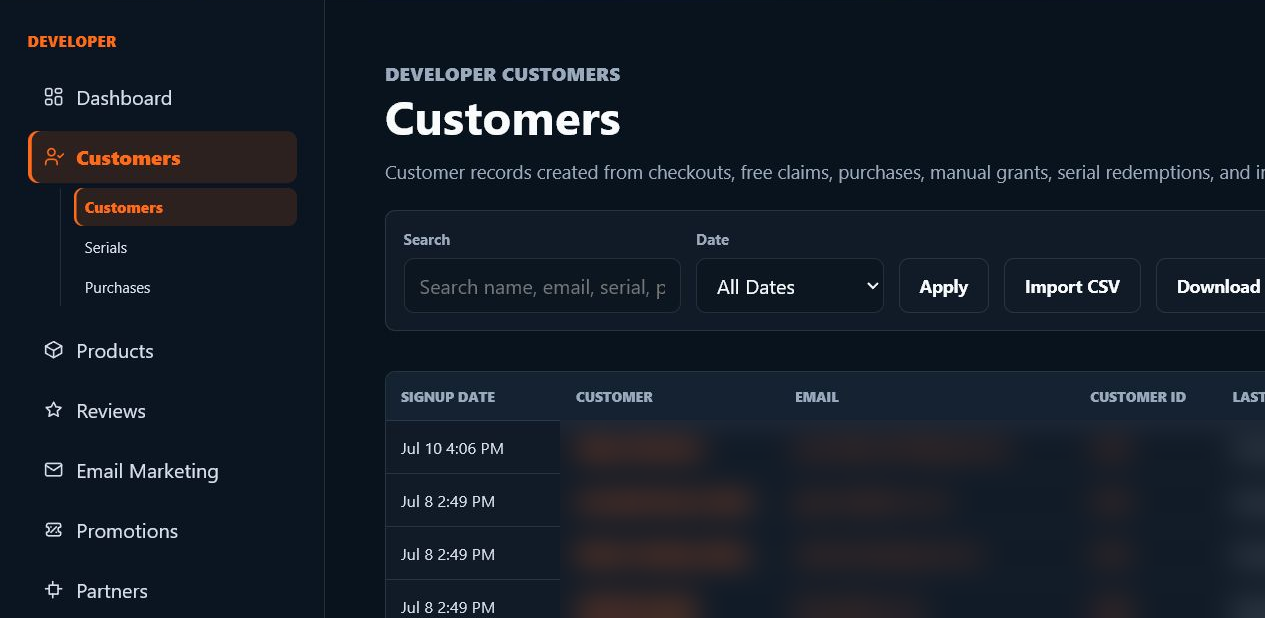
SoundSync
Package security posture
Developers should choose the package path that matches their release risk and build capability.
| Path | Trust posture | Developer responsibility |
|---|---|---|
| HISEScript | Fastest HISE integration with product-scoped activation and validation; less tamper-resistant than native because distributed script/client code is easier to inspect. | Install the generated script package, run Test Connection, test activation/offline/invalid states, and avoid overstating native enforcement. |
| HISE C++ | Stronger native-authoritative HISE path with runtime decisions moved through patched/rebuilt HISE source and SoundSync native code. | Patch and verify HISE source, rebuild/export, test host/runtime states, and regenerate when product or brand values change. |
| JUCE | Current native package path for activation, validation, deactivation, offline grace, secure persistence, branding, and customer access. | Integrate the package, keep network/storage work off the audio thread, and test subscription/refund/offline states before release. |
| Custom API | HTTP integration for products that need their own client or server implementation. | Use product-scoped credentials, documented endpoints, error handling, cache rules, and revocation behavior. |
SoundSync
Product-scoped credentials
Credentials belong to a product and environment, not to a broad developer account secret.
Product ownership
Keys are issued for a selected product and used by that product package or integration path.
Rotation and revocation
Developers can rotate, revoke, and inspect credential state without exposing full secrets in public documentation or screenshots.
Client reality
Any credential shipped in distributed software should be treated as extractable, so server validation, entitlement checks, and revocation remain important.
SoundSync
App ID, plugin key, and plugin secret
App ID, plugin key, and plugin secret is documented around the workflow it belongs to and the boundary developers need to understand.
Workflow fit
Place app id, plugin key, and plugin secret inside the surrounding SoundSync path instead of treating it as an isolated feature.
Boundary
Explain what SoundSync handles, what the developer still owns, and what should not be promised publicly.
Follow-through
Point the page toward the next setup, docs, reporting, or support action that naturally follows app id, plugin key, and plugin secret.
SoundSync
Credential rotation and revocation
Credential rotation and revocation affects whether a plugin can safely decide who should have access and how that decision survives real customer conditions.
Credential rotation and revocation setup
Tie the integration to product-scoped credentials, activation mode, device policy, package version, and release environment.
Runtime behavior
Use server validation, entitlement state, local cache rules, deactivation, and offline grace according to the selected HISE, JUCE, or API path.
Release confidence
Test success, invalid, revoked, expired, offline, and regeneration cases before treating credential rotation and revocation as launch-ready.
SoundSync
Test/live isolation
Test/live isolation is explained from the launch decision it supports, not as a generic platform module.
Launch decision
Clarify when a developer should use test/live isolation and what must be configured before it goes public.
Customer moment
Describe what the buyer, account holder, or partner sees when test/live isolation affects the experience.
Operational signal
Connect test/live isolation to the settings, activity, reporting, or support context that keeps it understandable after launch.
SoundSync
Activation states
Activation states affects whether a plugin can safely decide who should have access and how that decision survives real customer conditions.
Activation states setup
Tie the integration to product-scoped credentials, activation mode, device policy, package version, and release environment.
Runtime behavior
Use server validation, entitlement state, local cache rules, deactivation, and offline grace according to the selected HISE, JUCE, or API path.
Release confidence
Test success, invalid, revoked, expired, offline, and regeneration cases before treating activation states as launch-ready.
SoundSync
Validation
Validation affects whether a plugin can safely decide who should have access and how that decision survives real customer conditions.
Validation setup
Tie the integration to product-scoped credentials, activation mode, device policy, package version, and release environment.
Runtime behavior
Use server validation, entitlement state, local cache rules, deactivation, and offline grace according to the selected HISE, JUCE, or API path.
Release confidence
Test success, invalid, revoked, expired, offline, and regeneration cases before treating validation as launch-ready.
SoundSync
Offline grace
Offline grace affects whether a plugin can safely decide who should have access and how that decision survives real customer conditions.
Offline grace setup
Tie the integration to product-scoped credentials, activation mode, device policy, package version, and release environment.
Runtime behavior
Use server validation, entitlement state, local cache rules, deactivation, and offline grace according to the selected HISE, JUCE, or API path.
Release confidence
Test success, invalid, revoked, expired, offline, and regeneration cases before treating offline grace as launch-ready.
SoundSync
Device deactivation
Device deactivation affects whether a plugin can safely decide who should have access and how that decision survives real customer conditions.
Device deactivation setup
Tie the integration to product-scoped credentials, activation mode, device policy, package version, and release environment.
Runtime behavior
Use server validation, entitlement state, local cache rules, deactivation, and offline grace according to the selected HISE, JUCE, or API path.
Release confidence
Test success, invalid, revoked, expired, offline, and regeneration cases before treating device deactivation as launch-ready.
SoundSync
Secure local state
Secure local state affects whether a plugin can safely decide who should have access and how that decision survives real customer conditions.
Secure local state setup
Tie the integration to product-scoped credentials, activation mode, device policy, package version, and release environment.
Runtime behavior
Use server validation, entitlement state, local cache rules, deactivation, and offline grace according to the selected HISE, JUCE, or API path.
Release confidence
Test success, invalid, revoked, expired, offline, and regeneration cases before treating secure local state as launch-ready.
SoundSync
HISE/JUCE package boundaries
Package trust depends on choosing the right integration depth and explaining what each runtime can actually enforce.
HISEScript boundary
HISEScript is the faster implementation path and can provide strong product-scoped checks, but distributed script/client code is easier to inspect.
Native package boundary
HISE C++ and JUCE paths move more authority into native code, package storage, device identity, and release-tested runtime behavior.
Regeneration boundary
Credentials, branding, support URLs, product settings, and embedded package values should be regenerated when those launch settings change.
SoundSync
Legacy credential compatibility
Legacy credential compatibility affects whether a plugin can safely decide who should have access and how that decision survives real customer conditions.
Legacy credential compatibility setup
Tie the integration to product-scoped credentials, activation mode, device policy, package version, and release environment.
Runtime behavior
Use server validation, entitlement state, local cache rules, deactivation, and offline grace according to the selected HISE, JUCE, or API path.
Release confidence
Test success, invalid, revoked, expired, offline, and regeneration cases before treating legacy credential compatibility as launch-ready.
SoundSync
Security limitations
Security limitations protects developer accounts, customer information, and staff access as the business grows.
Access boundary
Limit visibility by workspace, role, product scope, sensitive permission, session state, and credential responsibility.
Privacy expectation
Keep customer data, screenshots, exports, support context, and account information scoped to the people who need it.
Review trail
Use audit activity, session revocation, permission checks, and operational review so access changes are explainable later.
SoundSync
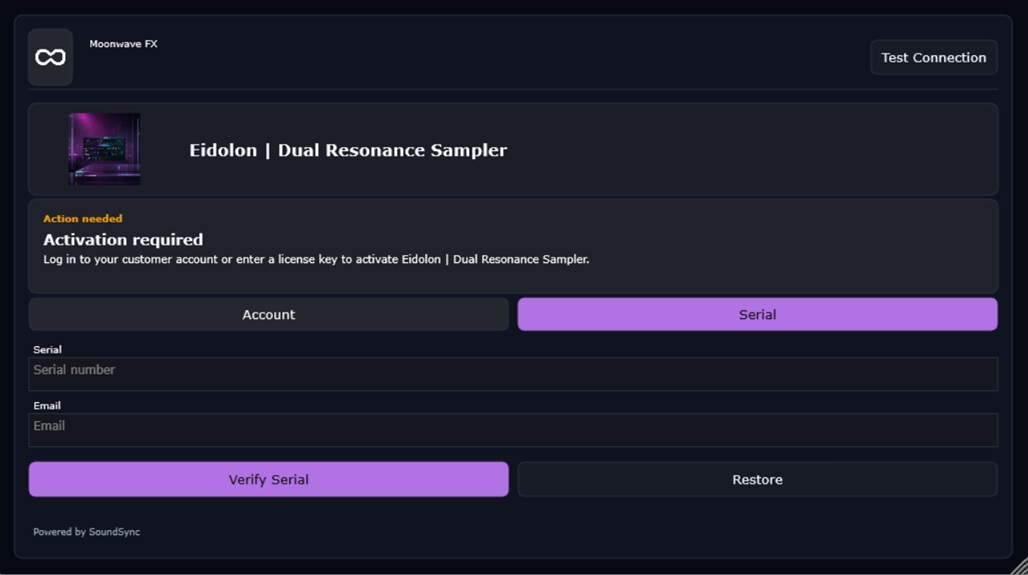
Product proof
Screenshots and diagrams are placed near the workflows they explain, so visitors see the actual SoundSync surfaces instead of abstract feature claims.
Questions developers ask
Is SoundSync only for plugins?
No. SoundSync supports plugins, instruments, sample libraries, digital downloads, subscriptions, and custom audio tools.
Can I use my own site?
Yes. You can use hosted storefronts, embedded storefronts, standalone embeds, and custom domains depending on the surface you choose.
Does marketplace attribution add another fee?
No. SoundSync uses one 10% fee on SoundSync-processed sales, including marketplace-attributed sales.
Licensing and Credential Security belongs in one connected launch system.
Move from setup to customer access, growth, trust, and operations without rebuilding the business around disconnected services.