Skip to content
SoundSyncAudio software platform

Hosted and Embedded Storefronts for Audio Products

Design once. Publish as a hosted storefront or embed it into your site.

Build product, catalog, deal, review, support, account, and checkout experiences in SoundSync, then publish them through the hosted storefront or the full embedded storefront package.
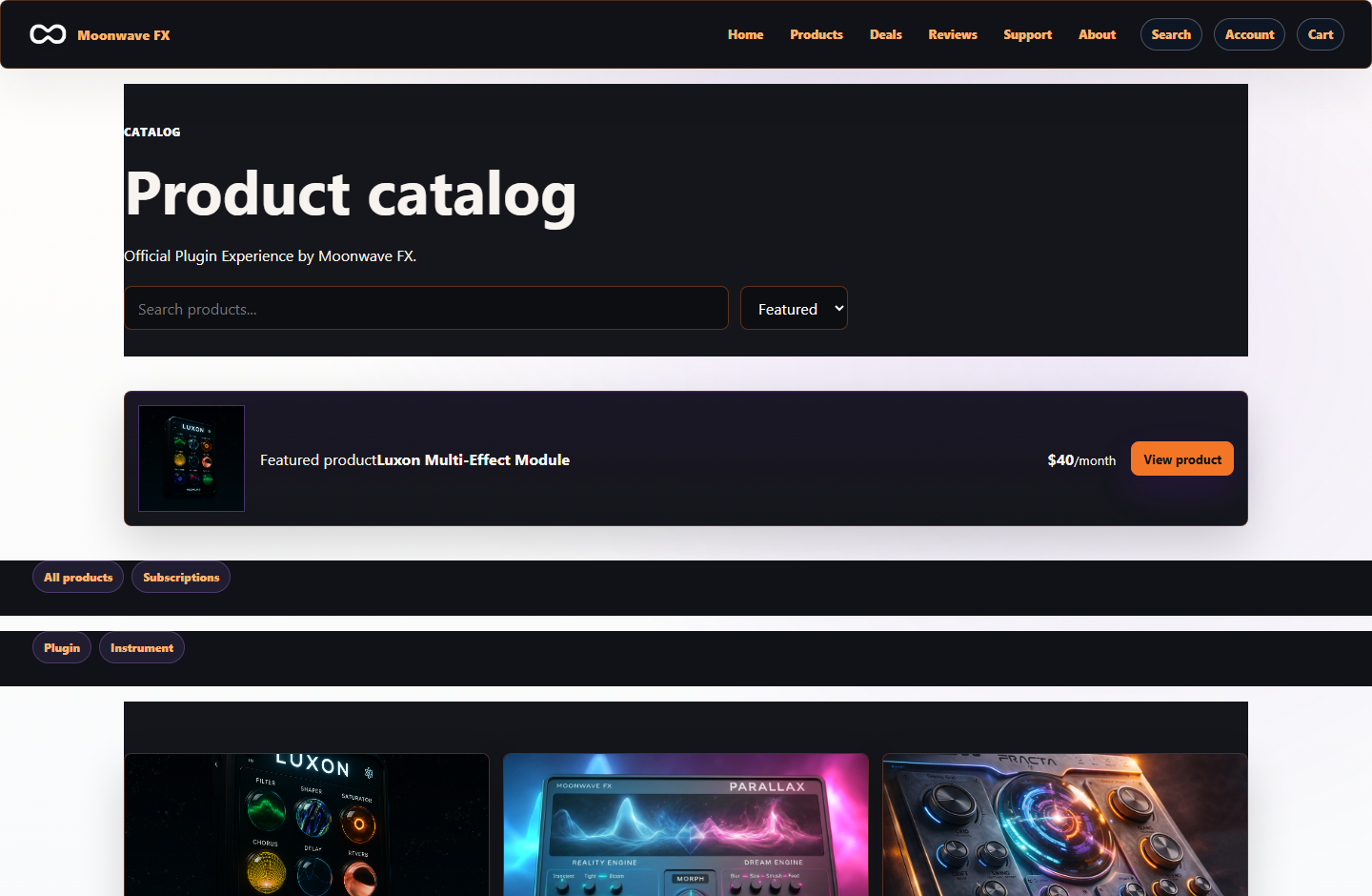
Live Moonwave FX storefront product catalog showing search, featured product, product media, subscription pricing, and product detail links.
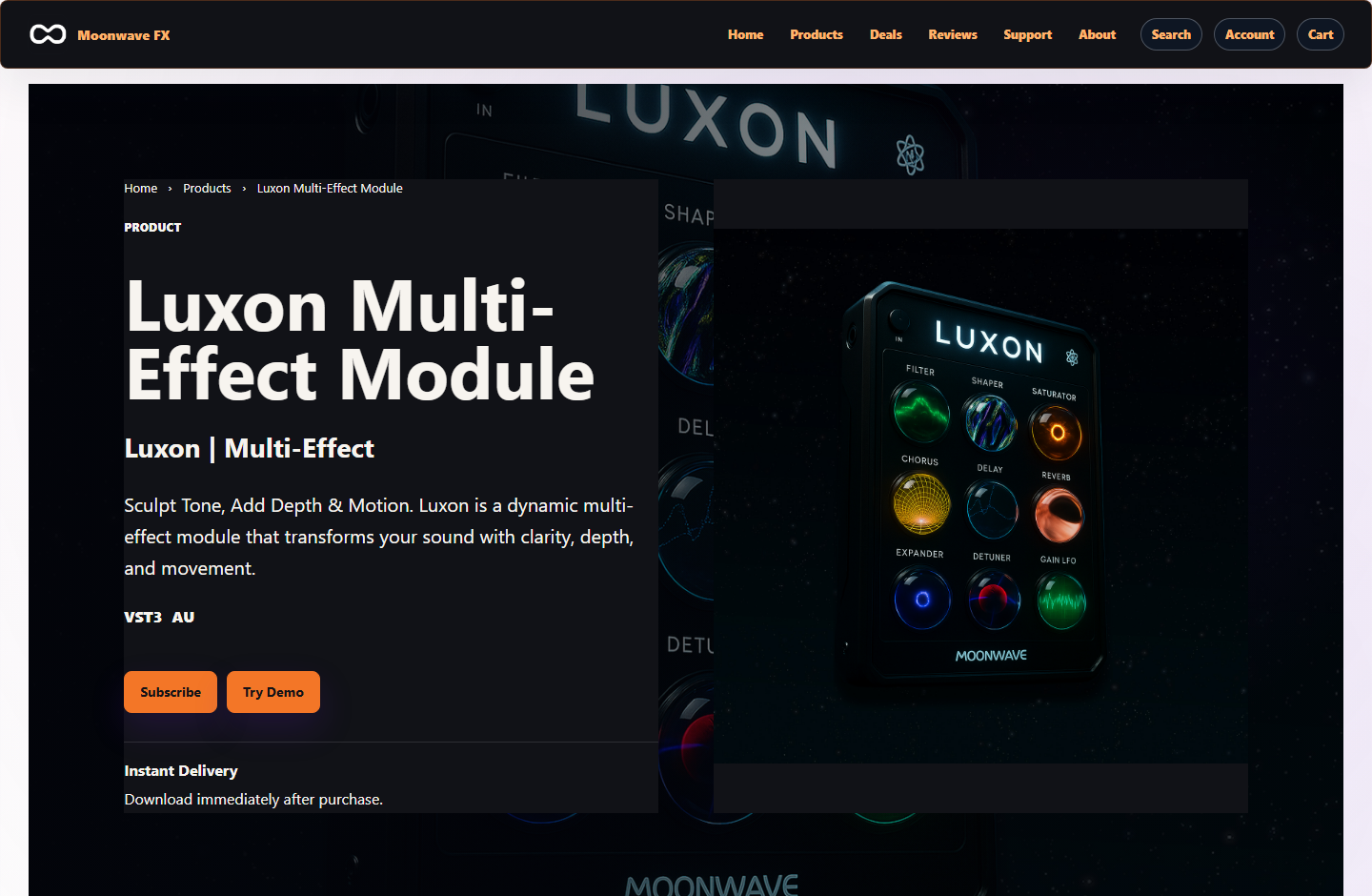
Live Moonwave FX Luxon product page showing product media, plugin description, formats, subscription action, and delivery notes.
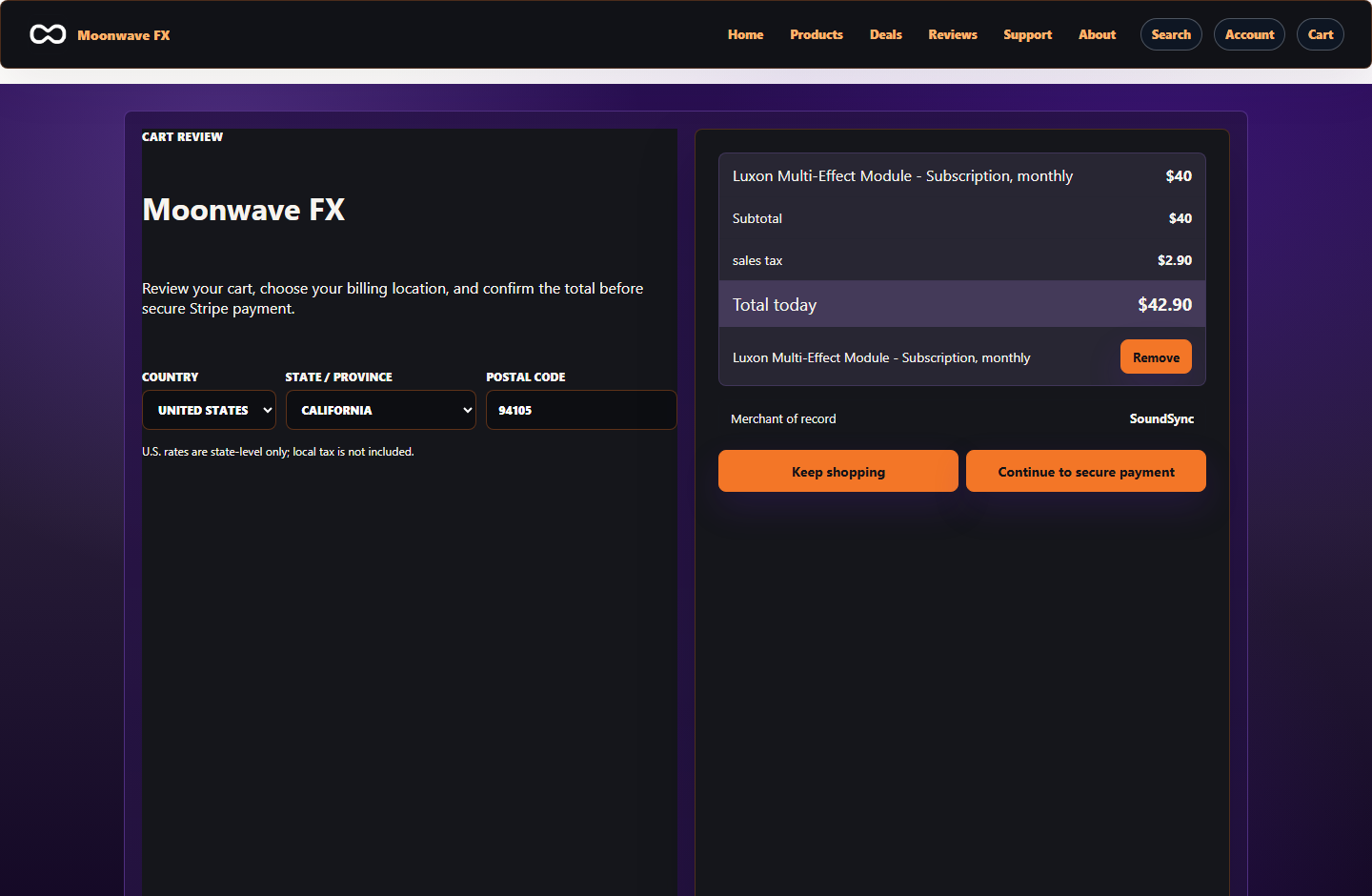
Live Moonwave FX cart review showing a Luxon subscription line item, tax presentation, Merchant of Record label, and secure payment action.

SoundSync

Hosted storefront homepage

The live Moonwave FX storefront homepage shows the branded customer entry point for product discovery, navigation, featured products, and commerce actions.
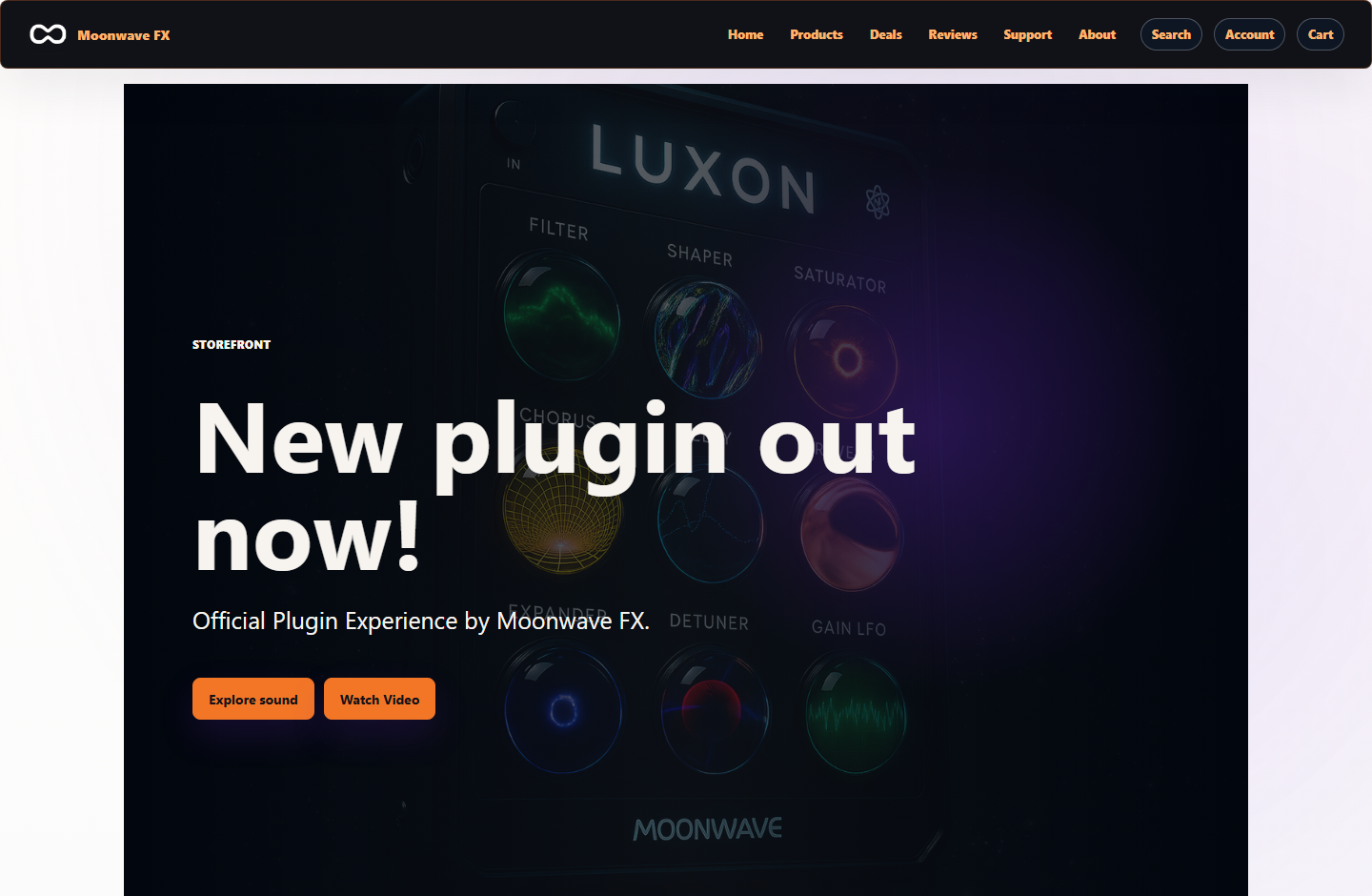
Live Moonwave FX hosted storefront homepage with product hero, navigation, featured products, and commerce entry points.
Moonwave FX storefront homepage

SoundSync

Catalog and product pages carry the sale

Customers can browse catalog pages, open product detail, review media and pricing, and move toward cart without leaving the branded storefront.

Live Moonwave FX Luxon product page showing product media, plugin description, formats, subscription action, and delivery notes.
Moonwave FX product detail

SoundSync

Cart, account, support, deals, and reviews are part of the storefront

The live customer storefront includes the surrounding pages buyers expect around checkout: account access, support, deals, and customer proof.

Live Moonwave FX cart review showing a Luxon subscription line item, tax presentation, Merchant of Record label, and secure payment action.
Moonwave FX cart and checkout

SoundSync

Website Builder

Website Builder shapes how customers discover, evaluate, and buy audio software through SoundSync.

Discovery surface

Use product media, categories, search, reviews, pricing, deals, and developer brand context where that surface supports it.

Buying path

Carry customers from browse or embed context into cart, checkout, account, downloads, serials, subscriptions, and support.

Attribution and limits

Track marketplace or storefront context without promising guaranteed placement, traffic, sales, or unrestricted customer contact data.

SoundSync

Hosted storefront

Hosted storefront shapes how customers discover, evaluate, and buy audio software through SoundSync.

Discovery surface

Use product media, categories, search, reviews, pricing, deals, and developer brand context where that surface supports it.

Buying path

Carry customers from browse or embed context into cart, checkout, account, downloads, serials, subscriptions, and support.

Attribution and limits

Track marketplace or storefront context without promising guaranteed placement, traffic, sales, or unrestricted customer contact data.

SoundSync

Full storefront embed

Full storefront embed shapes how customers discover, evaluate, and buy audio software through SoundSync.

Discovery surface

Use product media, categories, search, reviews, pricing, deals, and developer brand context where that surface supports it.

Buying path

Carry customers from browse or embed context into cart, checkout, account, downloads, serials, subscriptions, and support.

Attribution and limits

Track marketplace or storefront context without promising guaranteed placement, traffic, sales, or unrestricted customer contact data.

SoundSync

Standalone embeds

Standalone embeds are for focused product, checkout, newsletter, or account moments on an existing developer site.

Placement and origin

Publish a focused embed where the developer already has traffic, while SoundSync keeps checkout, entitlement, and customer account behavior tied to the product.

Visitor continuity

A customer can move from a product module or call-to-action into cart, account, support, or ownership without losing brand context.

Safe embed boundary

Embed scripts, allowed origins, storefront settings, and product identifiers stay explicit so a copied snippet does not become an unmanaged storefront.

SoundSync

Product pages

Product pages carry the offer: media, pricing, licensing expectations, downloads, reviews, support, and the path to checkout.

Offer presentation

Show product media, version notes, compatibility, license type, subscription status, reviews, and support links in one customer-ready page.

Purchase path

Connect the product page to cart, checkout, promo codes, marketplace attribution, and the customer library after purchase.

Launch upkeep

Keep imagery, copy, pricing, delivery files, review state, and support routing current as the product changes.

SoundSync

Deals

Deals shapes how customers discover, evaluate, and buy audio software through SoundSync.

Discovery surface

Use product media, categories, search, reviews, pricing, deals, and developer brand context where that surface supports it.

Buying path

Carry customers from browse or embed context into cart, checkout, account, downloads, serials, subscriptions, and support.

Attribution and limits

Track marketplace or storefront context without promising guaranteed placement, traffic, sales, or unrestricted customer contact data.

SoundSync

Reviews

Reviews shapes how customers discover, evaluate, and buy audio software through SoundSync.

Discovery surface

Use product media, categories, search, reviews, pricing, deals, and developer brand context where that surface supports it.

Buying path

Carry customers from browse or embed context into cart, checkout, account, downloads, serials, subscriptions, and support.

Attribution and limits

Track marketplace or storefront context without promising guaranteed placement, traffic, sales, or unrestricted customer contact data.

SoundSync

Customer account

Customer account is documented around the workflow it belongs to and the boundary developers need to understand.

Workflow fit

Place customer account inside the surrounding SoundSync path instead of treating it as an isolated feature.

Boundary

Explain what SoundSync handles, what the developer still owns, and what should not be promised publicly.

Follow-through

Point the page toward the next setup, docs, reporting, or support action that naturally follows customer account.

SoundSync

Cart and checkout

Cart and checkout sits in the money-to-access chain, so the page needs to make the commercial effect plain.

Money movement

Explain how checkout, provider events, taxes, fees, refunds, disputes, reserves, or settlement state affect the transaction.

Access impact

Connect the commercial state to orders, entitlements, subscriptions, downloads, customer library, and plugin validation.

Developer visibility

Show what developers can reconcile through revenue views, billing surfaces, statements, activity, or operational reports.

SoundSync

Navigation and routing

Navigation and routing is explained from the launch decision it supports, not as a generic platform module.

Launch decision

Clarify when a developer should use navigation and routing and what must be configured before it goes public.

Customer moment

Describe what the buyer, account holder, or partner sees when navigation and routing affects the experience.

Operational signal

Connect navigation and routing to the settings, activity, reporting, or support context that keeps it understandable after launch.

SoundSync

Brand Manager

Brand Manager is the identity source for storefronts, checkout, customer accounts, email, and generated package surfaces.

Public identity

Store name, tagline, logos, light/dark assets, colors, imagery, social links, and support URLs define what customers recognize.

Domain and sender trust

Root/apex domains, storefront subdomains, email sending domains, DNS progress, and SSL readiness keep the brand attached to web and email surfaces.

Package snapshots

HISE and JUCE package assets can carry Brand Manager values, while embedded/static package values should be regenerated when identity changes.

SoundSync

Custom domains

Custom domains let developers use the domain customers already know, with SoundSync handling the hosted-storefront side after DNS verifies.

Root or subdomain

Use the main/root domain for the SoundSync storefront, or use store, shop, or another subdomain when an existing site remains in place.

DNS-only developer work

Developers need domain ownership and DNS access; SoundSync provides guided records, verification checks, routing, and SSL certificate provisioning.

Propagation reality

DNS timing depends on the provider, so public pages should promise guided setup and status visibility rather than instant propagation.

SoundSync

Hosted/embed parity

Hosted/embed parity shapes how customers discover, evaluate, and buy audio software through SoundSync.

Discovery surface

Use product media, categories, search, reviews, pricing, deals, and developer brand context where that surface supports it.

Buying path

Carry customers from browse or embed context into cart, checkout, account, downloads, serials, subscriptions, and support.

Attribution and limits

Track marketplace or storefront context without promising guaranteed placement, traffic, sales, or unrestricted customer contact data.

Questions developers ask

Is SoundSync only for plugins?

No. SoundSync supports plugins, instruments, sample libraries, digital downloads, subscriptions, and custom audio tools.

Can I use my own site?

Yes. You can use hosted storefronts, embedded storefronts, standalone embeds, and custom domains depending on the surface you choose.

Does marketplace attribution add another fee?

No. SoundSync uses one 10% fee on SoundSync-processed sales, including marketplace-attributed sales.

Design once. Publish as a hosted storefront or embed it into your site. belongs in one connected launch system.

Move from setup to customer access, growth, trust, and operations without rebuilding the business around disconnected services.