Domain guide
Custom Domains and SSL
Use your main domain or a subdomain for a SoundSync storefront with managed SSL.
Your main domain is supported
Use an apex domain such as example.com or a subdomain such as shop.example.com. A store/shop prefix is not required. You need control of the domain and access to its DNS records; SoundSync provides the hosted storefront connection and SSL certificate management.
Moving an apex domain can affect an existing website. Review current DNS records and preserve unrelated mail records. Domain ownership and DNS access do not authorize SoundSync to change unrelated services.
SoundSync
Connect the domain
-
Enter the hostname
Choose the apex or subdomain you actually want to publish.
-
Review provider guidance
The setup view detects available provider/nameserver information and presents the required records.
-
Add the exact records
Use the displayed targets and ownership-verification values in your DNS provider. Avoid publishing verification tokens in screenshots.
-
Verify ownership and routing
Check the step-by-step status until DNS and ownership requirements are met.
-
Wait for SSL readiness
The certificate and connection status determine readiness; DNS propagation has no universal completion time.
-
Check real pages
Visit home, catalog, product, cart, checkout entry, support, and customer sign-in on the intended host.
Related settings are not automatic
Storefront SSL does not verify an email sending domain. Optional GA4 tracking becomes ready on the verified custom host only when configured separately.
If verification fails, compare record name, record type, target, and proxy/provider guidance. Do not repeatedly replace unrelated DNS records or assume an SSL warning is safe to bypass.
SoundSync
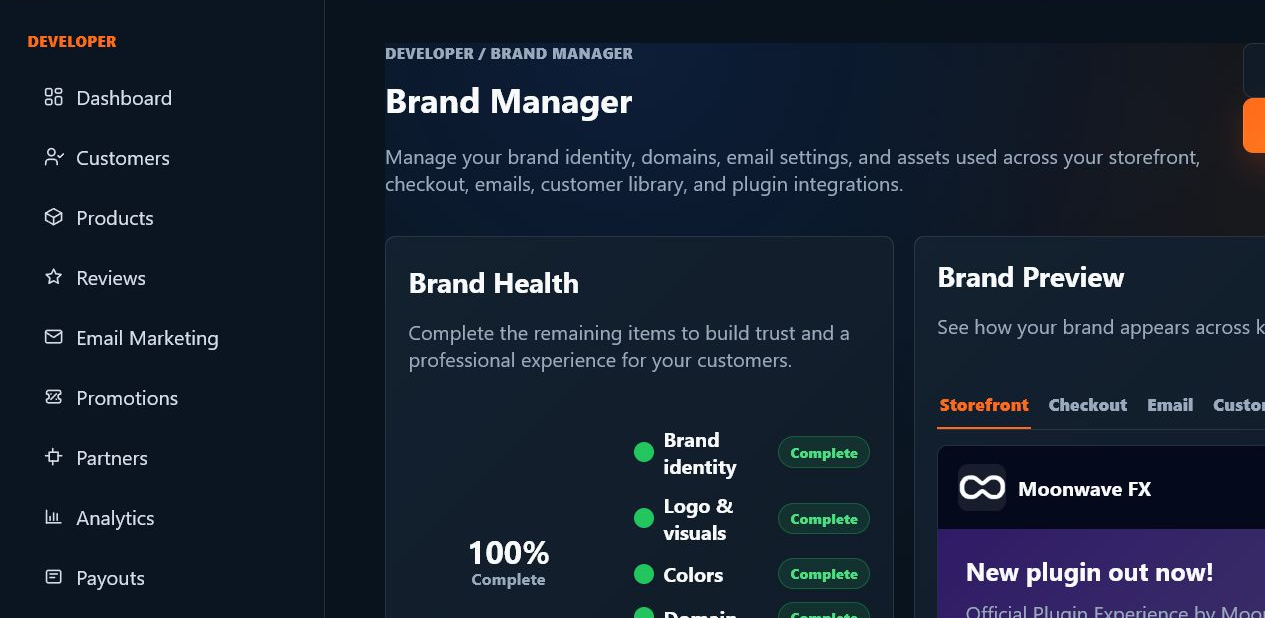
Domain status lives with brand setup
The Brand Manager screenshot shows domain readiness, storefront identity, color setup, and customer-facing brand state in the dashboard.