Brand guide
Brand Manager
Set the identity, palette, imagery, domains, and support values reused across SoundSync surfaces.
SoundSync
Identity and presentation
| Area | Values and purpose |
|---|---|
| Identity | Store/developer display name, tagline, short description, marketplace description, and store slug |
| Logos and imagery | Main, light/dark, icon and banner assets, plus default product imagery |
| Palette | Primary, secondary, tertiary/accent values and supported semantic overrides; preview contrast before saving |
| Appearance | Light/dark appearance and supported background/highlight values |
| Social links | Supported profile destinations; publish only links you control |
| Contact identity | Support inbox, reply-to, contact label, business address, response guidance, and availability |
| Domains | Apex or subdomain storefront, DNS ownership verification, and SSL status |
| Support content | FAQ/articles, policy and documentation links, contact-form configuration |
One source, several delivery mechanisms
Hosted storefront, Website Builder, checkout, customer library, and email identity reuse supported brand values. Product artwork remains product-specific. Plugin packages also carry generated configuration and bundled assets.
Dynamic retrieval and generated snapshots are different: a published web setting can update a web surface while an installed package still requires regeneration and a new binary. Review both after a brand change.
SoundSync
Set up the whole brand
-
Complete identity
Use the name and descriptions you want customers to see. Choose a stable store slug.
-
Prepare imagery
Upload suitable light/dark logos and default imagery; check transparency and actual placement.
-
Tune colors
Preview supported surfaces and maintain readable text, contrast, and focus indicators.
-
Configure support
Set the monitored inbox, help links, policies, articles, and optional form.
-
Connect domains
Use the exact DNS records in the guided domain view and wait for verified connection and SSL readiness.
-
Review emails and packages
Inspect the compliance footer and regenerate affected product packages where values are bundled.
SoundSync
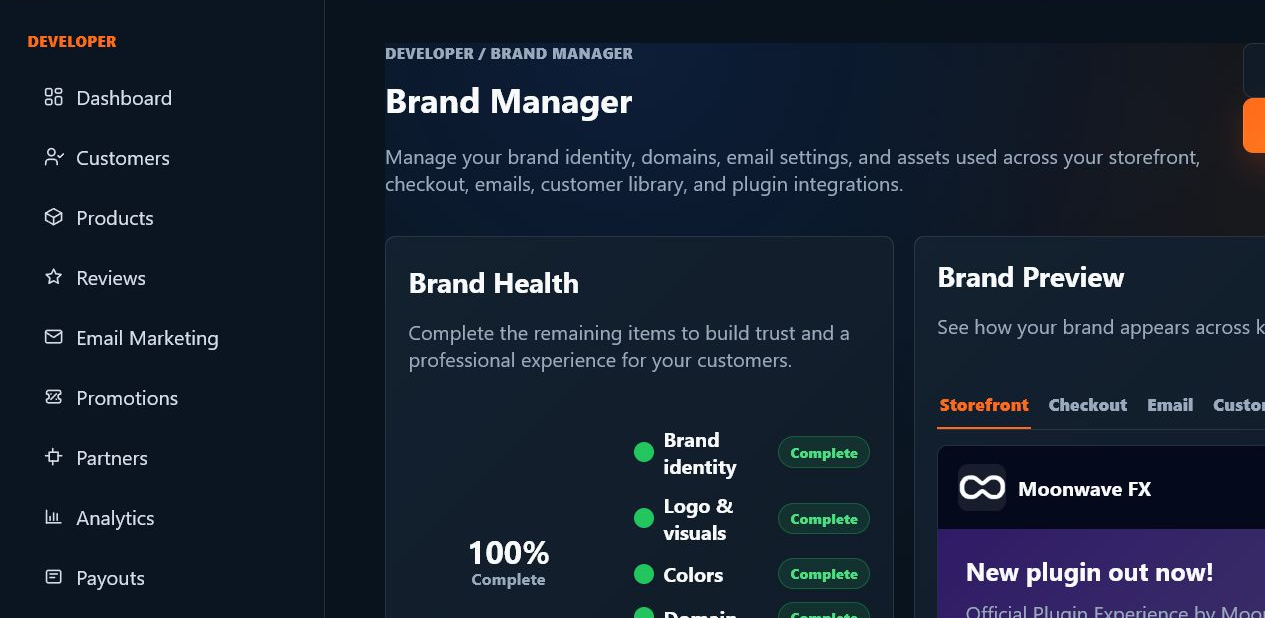
Brand Manager dashboard
The dashboard shows brand health, storefront preview, color setup, logo state, domain readiness, and customer-facing identity from one workspace.
SoundSync
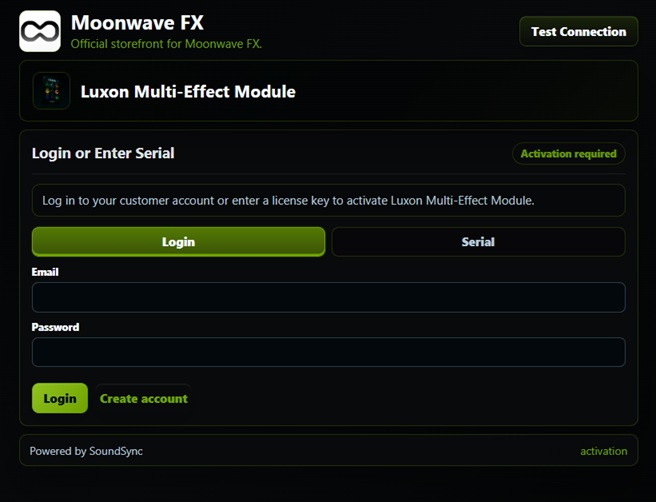
Branding reaches plugin customer screens
HISE and JUCE package screens reuse product identity, color, logo, support, and store context so activation and ownership feel connected to the developer brand.
SoundSync
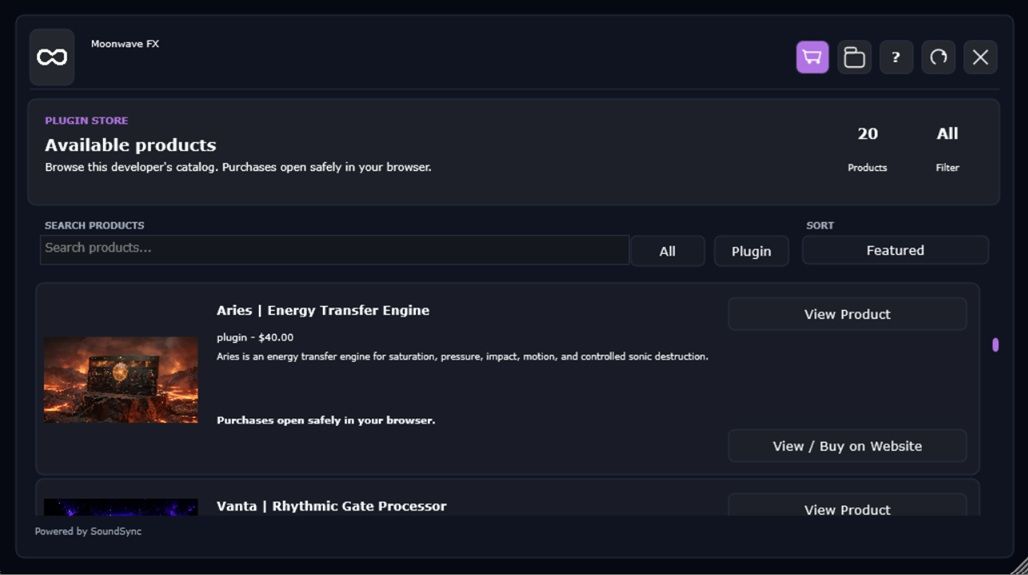
Store branding follows the in-app catalog
The JUCE Store catalog shows how branded customer-facing product browsing can appear inside the package experience after setup.